
Explore how we can use the skills students (and educators!) gained during the pandemic to produce prepared and resilient learners and create a student-centered Blended Learning Classroom. And launch students further than ever before!
“To understand their world we must be willing to immerse ourselves in that world. We must embrace the new digital reality. If we can’t relate, if we don’t get it, we won’t be able to make schools relevant to the current and future needs of the digital generation.”
-Ian Jukes
Aftermath #1: Gains in Digital and Technological Literacy and Widespread Devices
I know the feeling…so much work done on the computer. Many teachers I have spoken to have stated that they “cannot wait to get back to pencil and paper”, because that is what we knew (and some students do learn better that way!). That was our “normal”…but as cliche as it sounds…we are now in a new normal. And most students are living in a much different generation and way of life going forward than we had. And many of the jobs and careers in their future are going to look much different than they did prior to March of 2020. We need to take this time to really adopt a blended learning model in the classroom.
Opportunity #1: Use a Tech-Rich Environment and a Blended Classroom Model to Improve Your Instructional Practices and Enhance Student Learning Experiences
I am not saying to completely get rid of pencil and paper. Blended Learning means a balance and blend of online and offline learning in the classroom. We do need to unplug at times, that is equally important. Especially at the kinder and primary grade levels when fine motor skills and penmanship are being taught explicitly. However, with students as young as Kinder and Pre-K able to navigate devices, learn from digital content and complete tasks digitally, we need to utilize that. We now know, students can. Yes, even the little ones, they can!
A few benefits of a Tech-Rich & Blended Model (A balance of plugged and unplugged learning experiences, projects and activities within a student-centered classroom):
- Saves Paper: Trees and Money! Both the environment and the bookkeeper will appreciate the efforts.
- Saves Prep Time: With many digital activities being less or no prep time at all, that gives you as an educator more time to…educate! Less time spent digging paper out of the hundreds of nooks and crannies in the copier in between bites of your lunch. (You may even have time to squeezing in a restroom break!).
- Student Engagement, Individualization and Ownership: Having blended learning experiences and tech-rich instruction allows students to engage in a way that is fun and familiar to them. It also allows more individualization to different learning styles and learning needs. Students also will have more of a sense of ownership over their learning and the products they are producing to show their learning. And you, as an educator, will have more time to work with small groups and meet students where they are!
- Data, Data, Data: There are so many quick and easy formative and summative assessment options when using technology to your advantage in the classroom. Many programs, or apps like Google Forms that can get data quickly to drive your instructional decisions. Not to mention, tools and templates to assist students in tracking their own data! Ownership!
- Preparing Students THEIR Future: Whether we like it… agree with it…hate it… however you feel about technology “taking over”, I don’t think anyone can disagree that it is a critical and imperative part of the future. And being digitally and technologically literate will be a crucial element of the future workforce. It is our duty as educators to make sure that we are preparing students to be competitive, relevant, and competent citizens And we must face the fact that technology and computerized process will be an even bigger part of their future.
Free Resources from Me to You
I am going to provide you with three FREE digital resources to look over and think about if they could be incorporated into your instruction and classroom this fall. All three of these resources I am sharing will support the plugged part of your blended learning instruction. These resources are little to no-prep work, work for in person, distance, virtual, or hybrid learning, NTI Friendly!
Great for use in a blended and tech-rich classrooms. They can be assigned through Google Classroom as an independent assignment, assigned to complete collaboratively in math centers or use during whole group instruction by projecting on a SMART Board or other interactive panel. Click on the link to be directed to my Teachers Pay Teachers Store to download.
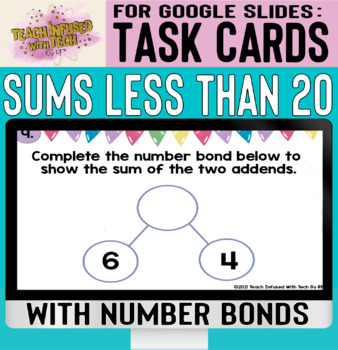
1. Google Slides Digital Task Cards: Sums Less than 20 with Number Bonds
This resource is a set of digital task cards created in Google Slides on the skill of sums less than 20 with number bonds. Targeted to K and 1st grade students.
This deck includes: 20 Digital Task Cards in Google Slides.
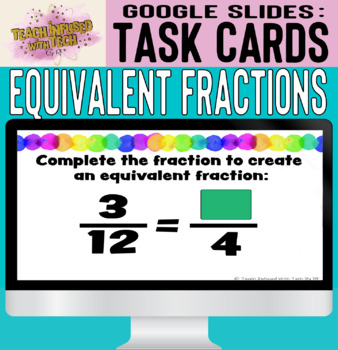
2. Google Slides Digital Task Cards: Equivalent Fractions
This resource is a set of digital task cards created in Google Slides on the skill of generate an equivalent fraction for the fraction shown. The students are given either the numerator or the denominator for the fraction they are generating. Targeted to 3rd and 4th grades.
This deck includes: 20 digital task cards in Google Slides
3. MAKING WORDS: PAPERLESS Digital (Virtual) Literacy Center Activity! Interactive!
This paperless, digital literacy center consists of a two week sample of my making words activity using virtual/digital letter manipulatives. Each activity had a focus pattern for phonics. This is a two week sample resource, however I do have a paid full product that has a full 26-weeks of making words activities! The full resource includes beginning and ending blends, within word patterns as well as affixes (prefix, suffixes).

In part 2: I will cover, the Aftermath: Executive Function Skills and will have some more thoughts, ideas and free resources to get you started!
 Teach Infused With Tech By: RF